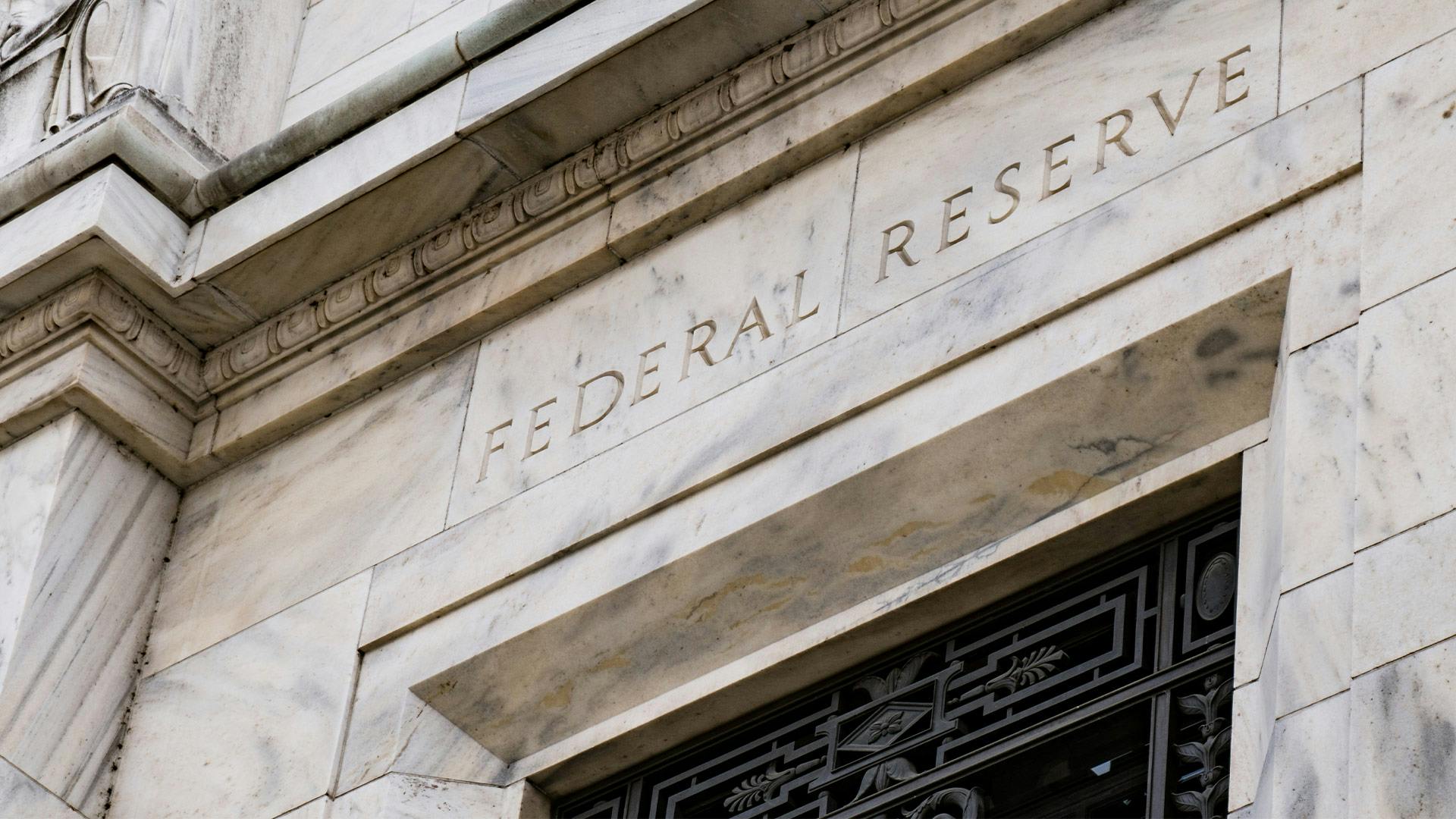
Fed holds in January
Coming off three straight cuts, the Federal Reserve pumped the brakes and held the federal funds range steady in January.
Economic expansion and pervasive uncertainty across the U.S. were enough for the central bank to push off additional cuts.
The pause in cuts “likely continues unless or until the job market weakens further,” said Mike Fratantoni, chief economist at the Mortgage Bankers Association. “With inflation remaining elevated, the FOMC majority does not seem in any rush to make further rate moves.”
Find your lowest rate. Start hereHow will mortgage rates react to the Fed news?
Interest rates typically rise alongside increases to the fed funds rate and decline after cuts. However, mortgage rate movements varied in the immediate aftermath of the most recent Fed decisions.
The day following each of the last two holds in June and July of last year, the average 30-year fixed rate fell four (0.04%) and two (0.02%) basis points week-over-week, according to Freddie Mac. After cuts in September, October, and December, the average respectively dropped nine (0.09%), two (0.02%), and rose three (0.03%) points from the week prior.
Over the past three months, interest rates followed a tight, downward trajectory, with the average 30-year FRM gradually descending to 6.09% on Jan. 22 from 619% on Oct. 23. This Fed hold following three-straight cuts gives the central bank a wait-and-see approach until its next decision in March.
In its post-meeting statement, the FOMC said economic activity continues to expand at a solid pace, with low job gains, stabilizing unemployment, and somewhat elevated inflation.
The inflation rate had a bumpy ride through 2025 and remains above the FOMC’s 2%, most recently plateauing at 2.7% in November and December, according to the Bureau of Labor Statistics*. The January 2026 data release is scheduled for Feb. 11.
*In August, President Trump fired the Bureau of Labor Statistics commissioner following a weak jobs report.
The Fed may need to see the inflation rate decrease or employment soften further before another cut can be called for. Many industry forecasts predict gradual interest rate descension over the course of 2026. Meanwhile, the average 30-year fixed mortgage rate currently hovers near two-year lows.
“The Fed’s holding pattern clouds the picture for mortgage rates in 2026,” said Eric Orenstein, senior director at Fitch Ratings. “After steadily declining for the last eight months, it’s unclear if and when they will pass the critical 6% mark.”
The Fed’s role and January’s FOMC meeting
At its January meeting, the Federal Open Market Committee (FOMC) voted in a 10-2 majority to hold the federal funds target range (with the two nay votes advocating for a 25-basis point cut). This decision broke the streak of three straight cuts that ended 2025.
In addition to holding the fed funds rate, the FOMC will adjust its monetary policy as needed based on new data, risks, and evolving outlooks, while also reaffirming its mandate to stabilize prices.
The U.S. annualized inflation rate hit a 41-year high of 9.1% in June 2022 and the Fed began taking action to tame it. Since the beginning of 2025, inflation swung down and back up, starting at 3% in January, hitting a low of 2.3% in April, then flattening at 2.7% to finish the year. The inflation rate remains above the Fed’s long-term goal of 2%.
President Trump and his administration have scrutinized the Fed, calling central bank chairman Jerome Powell a “fool” and “numbskull,” before serving him with subpoenas for criminal indictment. Last fall, the President lost a court appeal trying to fire governor Lisa Cook — a decision looking likely to be upheld by the Supreme Court. Powell’s term as chair ends in May.
In addition to the Fed’s actions, multiple economic and geopolitical factors influence mortgage rates. While the central bank technically doesn’t set mortgage interest rates itself, its monetary policies do intrinsically correlate with mortgage rate movements.
The latest projection materials from December suggests more cuts could be in store for 2026. The FOMC’s next meeting convenes on Mar. 17-18.
Find your lowest rate. Start hereShould you lock in a mortgage rate?
A bevy of influential factors subject mortgage rates to high volatility — especially during volatile times.
Although projections can (and do) shift behind new data and world events, the FOMC’s hold signaled caution. Of course, a lot can happen between now and March that can change their stance.
“The biggest mistake I see is waiting for the perfect rate. If you’re ready to buy, the smartest move is still to lock in your rate now,” said Charles Goodwin, head of bridge and DSCR lending at Kiavi. “A home purchase should be about readiness: do you have a contract in hand, is the payment affordable, and does the home fit your needs? That matters more than trying to time the market. Refinancers have more flexibility, so they can afford to wait and see if small improvements come through later this year.”
Regardless of what happens to rates in 2026, getting creative in your budgeting and negotiating can help you save. Building home equity is a common way that people gain wealth and one of the biggest advantages of owning property.
If you’re ready to begin your path to homeownership, talk to a local mortgage professional to see what rates and loan types you qualify for.
Time to make a move? Let us find the right mortgage for you