Key Takeaways
- Bank statement loans let self-employed borrowers qualify using 12 or 24 months of eligible deposits instead of tax returns, after the lender excludes non-income transfers and applies its underwriting and expense adjustments.
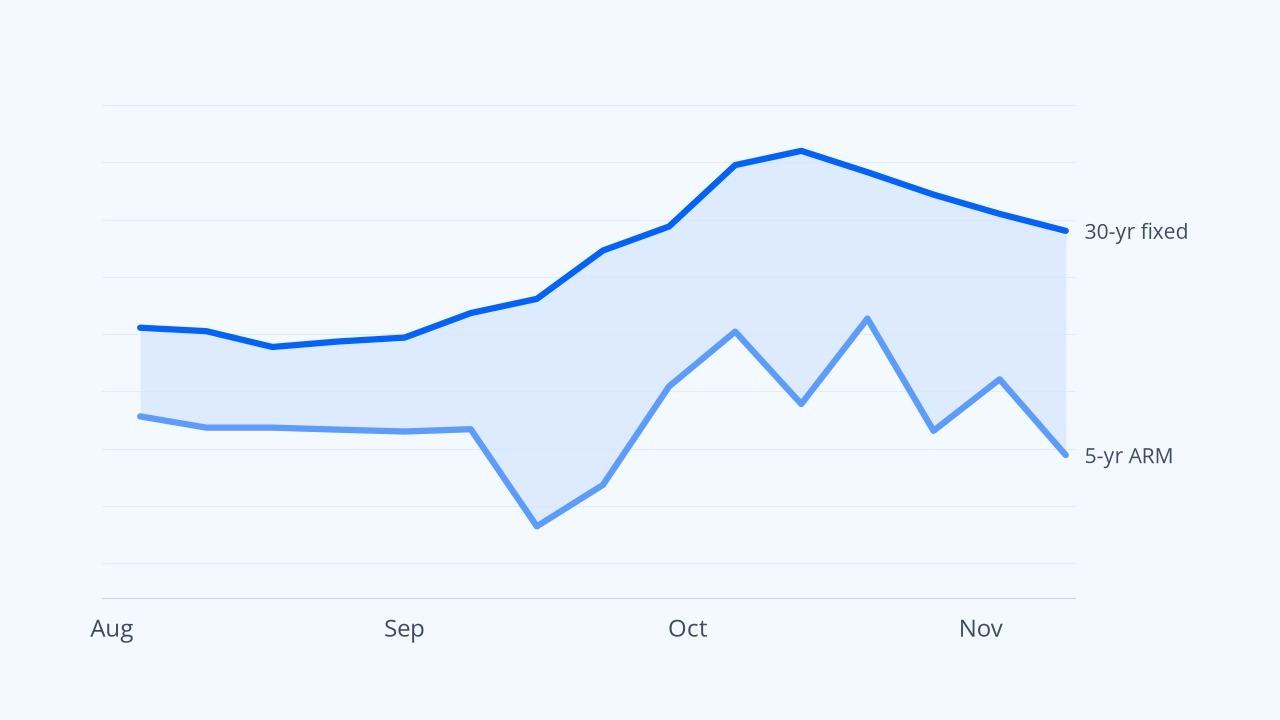
- On Nov. 14, 2026, one lender’s published 30-year fixed bank statement rates ran from 7.125% (7.485% APR, with 3.5 points) to 9.00% (no points). These are different pricing scenarios from one lender, not a market-wide rate range or a matched comparison with conventional loans.
- The lenders we checked list a 620–660 credit minimum, 10% down for a primary home and 3–6 months of reserves. Meeting a minimum does not guarantee approval.
If you’re self-employed, your tax returns may show far less income than your business actually brings in. A bank statement loan solves that by calculating income from your deposits. A bank statement loan may cost more than a conventional loan; compare matched quotes, points, fees and eligibility. For some borrowers, it can be the difference between qualifying and not.
Check your home loan options. Start hereIn this article (Skip to...)
- Bank statement loan rates
- Requirements by lender
- How lenders calculate your income
- Bank statement loan vs. conventional
- How we got these numbers
- FAQ
Want to see our expert mortgage insights first?
Add The Mortgage Reports as a preferred source on Google. You’ll automatically see our latest rate analyses, buying guides, and housing forecasts highlighted in your Google Search, AI Mode, and AI Overviews.
Bank statement loan rates
| Loan | Rate | APR | Points |
| 30-year fixed bank statement, lowest | 7.125% | 7.485% | 3.50 |
| 30-year fixed bank statement, no points | 9.00% | Not stated (see lender's disclosure) | 0 |
| 30-year fixed conventional (national average, Nov. 10) | 7.201% | 7.270% | — |
Bank statement rates are Griffin Funding’s published 30-year fixed range on Nov. 14, 2026. The lowest rate requires 3.5 points; Griffin’s loan amount, LTV, credit score and property type assumptions apply as stated with its published rates. These are different pricing scenarios from one lender, not a market-wide rate range or a matched comparison with conventional loans. Rates vary with credit score, down payment, loan size and property type. Second homes and investment properties typically cost 0.25 to 0.50 point more (McGowan Mortgages).
Requirements by lender
| Requirement | Griffin Funding | JVM Lending (bank statement) | JVM Lending (12-month personal) |
| Minimum credit score | 620 | 660 | 640 |
| Minimum down payment | 10% (680+ score, up to $1M) | 10% | 10% |
| Maximum loan | $4.5 million | Not stated | $3.5 million |
| Statements | 12 or 24 months, personal or business | 12 to 24 months | 12 months, personal |
| Maximum DTI | 55% | Up to 50% | Ask lender |
| Reserves | 3+ months | 3–6 months | 3–6 months |
| Self-employment history | Ask lender | 2 years | Not required |
Sources: Griffin Funding; JVM Lending (Oct. 2026). JVM’s 12-month personal-statement loan is a separate product from its standard bank statement program.
How lenders calculate your income
With personal statements, lenders count eligible deposits after excluding non-income transfers and applying their underwriting rules. With business statements, they subtract an expense factor. Griffin Funding’s factor ranges from 15% to 50% depending on your business type and staff, and a CPA letter can lower it to as little as 10%.
| Business type | No employees | 1–5 employees | 6+ employees |
| Service | 15% | 30% | 50% |
| Product | 25% | 50% | 50% |
Example: $20,000 in average monthly business deposits with a 30% expense factor counts as $14,000 a month in qualifying income.
Time to make a move? Let us find the right mortgage for you
Bank statement loan vs. conventional
| Bank statement loan | Conventional loan | |
| Income proof | 12–24 months of deposits | Tax returns, W-2s |
| Typical rate | May cost more; compare matched quotes, points and fees | Market rate |
| Down payment | 10%+ | 3%+ |
| Loan size | Up to $3.5M–$4.5M | $832,750 conforming limit in most areas (2026) |
How we got these numbers
Rates and requirements come from lenders’ published bank statement programs, checked Nov. 14, 2026. The expense factors shown are Griffin Funding’s and may differ at other lenders. The conventional rate is the Mortech national 30-year fixed purchase average on Nov. 10, 2026.
FAQ
Sources: Griffin Funding: Bank statement loans (rates as of Nov. 14, 2026); JVM Lending: Bank statement mortgage (Oct. 23, 2026); McGowan Mortgages: Bank statement loan rates (March 2026); Mortech national averages via The Mortgage Reports (Nov. 10, 2026).