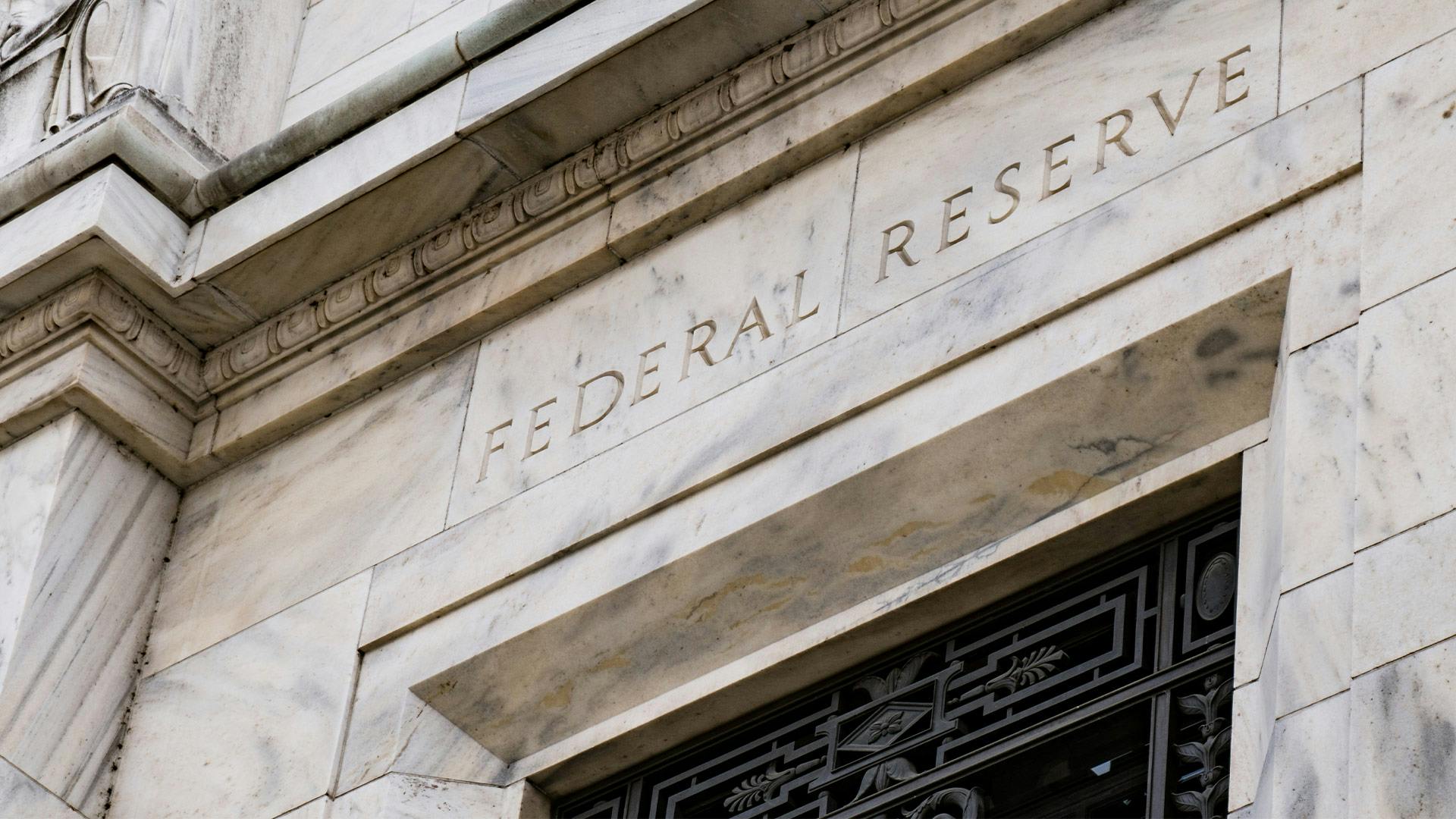
Fed cuts in December
The Federal Reserve made its third consecutive federal funds rate cut of 2025 in December.
While inflation remains higher than desired and last pointed upward, the administration’s weak employment and overall economic uncertainty drove the central bank’s quarter-point cut.
“The Federal Reserve is making decisions with limited market data available. However, much data still points to a softening labor market and inflation that remains persistent, keeping prices high heading into the holiday season,” said Selma Hepp, chief economist at Cotality.
Find your lowest rate. Start hereHow will mortgage rates react to the Fed news?
Interest rates typically rise alongside increases to the fed funds rate and decline after cuts. However, mortgage rate movements varied in the immediate aftermath of the most recent Fed decisions.
The day following each of the last two holds in June and July, the average 30-year fixed rate fell four (0.04%) and two (0.02%) basis points week-over-week, according to Freddie Mac. After cuts in September and October, the average dropped nine (0.09%) and two (0.02%) points from the week prior.
Interest rates trended downward over the last three months, as the average 30-year FRM gradually descended to 6.19% on Dec. 4 from 6.50% on Sep. 4. The third-straight Fed cut of 2025 will likely keep interest rates following a similar trajectory heading into next year.
In its post-meeting statement, the FOMC said economic activity continues to expand at a moderate pace, with slowing job gains, increasing unemployment, and somewhat elevated inflation.
The inflation rate progressed toward the FOMC’s 2% goal to begin 2025 before most recently rising to 3% in September from 2.9% in August and 2.7% in July, according to the Bureau of Labor Statistics*. October’s inflation data release was cancelled, while November’s is scheduled for Dec. 18.
*In August, President Trump fired the Bureau of Labor Statistics commissioner following a weak jobs report.
“Today’s move will do little to improve home affordability as prices remain strong and mortgage rates are unlikely to slip under the 6% mark for a 30-year mortgage, which will keep cautious first-time home buyers on the sidelines, and overall home buying activity seasonally slow until we come closer to the spring home buying season,” Hepp said.
While the Fed had been adamant in decelerating inflation needed before a cut could be called for, deteriorating economic conditions for the vast majority of people in the country was enough to drive another cut. Whether or not mortgage rates follow remains to be seen, but they currently hover at annual lows and came down compared to the last two years.
“The biggest mistake I see is waiting for the perfect rate. If you’re ready to buy, the smartest move is still to lock in your rate now,” said Charles Goodwin, head of bridge and DSCR lending at Kiavi. “Waiting on the sidelines for a big drop is risky since history shows Fed cuts don’t always flow through to mortgages. A home purchase should be about readiness: do you have a contract in hand, is the payment affordable, and does the home fit your needs? That matters more than trying to time the market for an eighth or a quarter of a percent.”
The Fed’s role and December’s FOMC meeting
At its December meeting, the Federal Open Market Committee (FOMC) voted in a 9-3 majority to cut the federal funds target range by 25 basis points (with one of the nay votes advocating for a 50-basis point cut and the other two wanting none). This decision marks the third straight cut of 2025 after five-straight holds in January, March, May, June, and July.
In addition to the fed funds rate cut, the FOMC reiterated that it will adjust its policy stance as appropriate based on new data, risks, and evolving outlooks.
The U.S. annualized inflation rate hit a 41-year high of 9.1% in June 2022 and the Fed began taking action to tame it. Since the beginning of 2025, inflation swung down and back up, starting at 3% in January, hitting a low of 2.3% in April, then gradually climbing to 3% in September. The inflation rate remains above the Fed’s long-term goal of 2%.
President Trump and his administration have scrutinized the Fed, calling central bank chairman Jerome Powell a “fool” and “numbskull,” and openly asking for his resignation if cuts didn’t come. Recently, the President lost a court appeal trying to fire governor Lisa Cook.
In addition to the Fed’s actions, multiple economic and geopolitical factors influence mortgage rates. While the central bank technically doesn’t set mortgage interest rates itself, its monetary policies do intrinsically correlate with mortgage rate movements.
Based on the latest projection materials, more cuts could be in store for 2026. The FOMC’s next meeting convenes on January 27-28.
Find your lowest rate. Start hereShould you lock in a mortgage rate?
Being influenced by a bevy of factors make mortgage rates subject to high volatility — especially in volatile times.
Although projections can (and do) shift with new information, the FOMC’s latest cut signaled continued weakness in the labor market and an unstable economic forecast. A slowing inflation rate could put more cuts on the horizon.
“Purchase buyers should lock sooner, because certainty matters when you’re under contract and heading to closing,” said Goodwin. “On the flip side, if you’re still early in your search, you’ve got more time to see if late-year declines materialize. Refinancers have more flexibility. They’re not racing against a deadline, so they can afford to wait and see if small improvements come through later this year. But don’t expect another pandemic-era plunge.”
Regardless of where rates go, you should always negotiate and get creative in budgeting. Building home equity is one of the most common ways to gain wealth and biggest advantages of owning property.
If you’re ready to begin your path to homeownership, talk to a local mortgage professional to see what rates and loan types you qualify for.
Time to make a move? Let us find the right mortgage for you