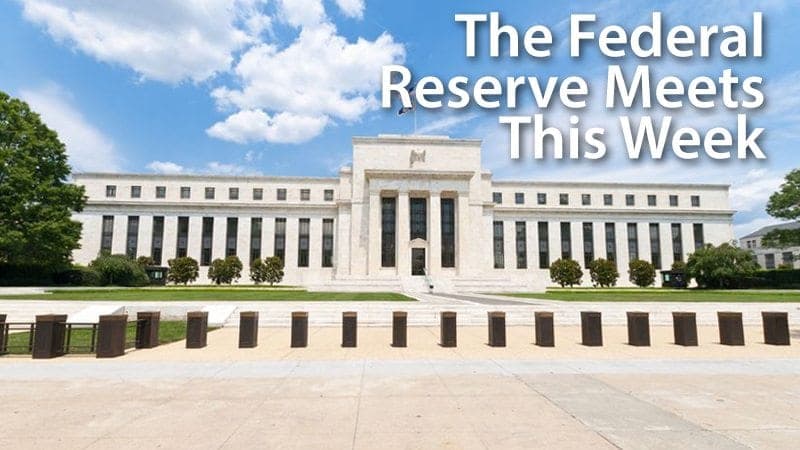
If you want to be notified when I write something new on The Mortgage Reports, sign up for free daily email alerts or subscribe to the free RSS feed.

Explaining The Federal Reserve’s Statement In English (March 16, 2010)

Posted on March 16, 2010
Filed under FOMC Announcements
Read the complete post

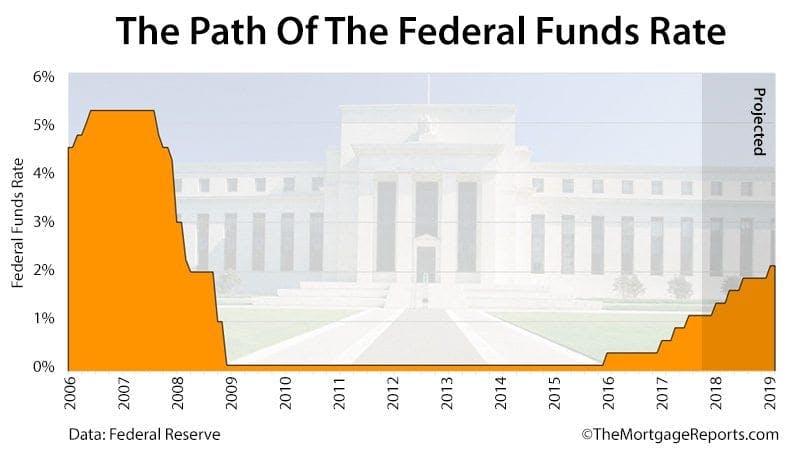
Putting the FOMC statement in plain EnglishToday, the Federal Open Market Committee voted 9-to-1 to leave the Fed Funds Rate unchanged, in its target range of 0.000-0.250 percent.

In its press release, the FOMC noted that the U.S. economy "has continued to strengthen" and that the jobs markets "is stabilizing".  It also said that business spending has "has risen significantly".

This is a slight departure from the Fed's January statement in which housing was not mentioned at all, and business spending was said to be "picking up".

The change is notable, even if barely detectable.

Today's statement also marks the 6th straight session after which the Fed described the economy with optimism.  The 2008-2009 recession is over and that growth is returning to Ohio and the U.S., in general.

The economy is not without threats, however, and the Fed identified several:

  1. High unemployment threatens consumer spending
  2. Housing starts are at a "depressed level"
  3. Consumer credit remains tight

The message’s overall tone, however, remained positive and inflation remains within tolerance limits.

Lastly, the Fed confirmed its plan to end its $1.25 trillion mortgage markets commitment in March 31, 2010. Fed insiders estimate that the bond-buying program lowered mortgage rates by 1 percent since its start. Rates should rise once the program expires.

Mortgage market reaction is muted to the Fed's press release. Mortgage rates are unchanged this afternoon.

The FOMC’s next scheduled meeting is a 2-day affair, April 27-28, 2010.

(Content supplied by Bring the Blog)


Dan Green is an active loan officer. Email or call 513-443-2020. Dan is on Twitter at @mortgagereports.

Tags: Fed Funds Rate, federal reserve, FOMC

SEO Copywriting Made Simple
I use Scribe to improve my blog SEO

Correlating Mortgage Rates To The Fed Funds Rate

Posted on March 16, 2010
Filed under Fed Funds Rate
Read the complete post

Fed Funds Rate vs 30-year fixed rate mortgage (1990-2010)

The Federal Open Market Committee meets today and will vote to keep the Fed Funds Rate unchanged. But don't rest on your rate-locking laurels.

Mortgage Rates Are Made On Wall Street

When the Federal Reserve votes to leave the Fed Funds Rate unchanged, it's different from the Fed keeping mortgage rates unchanged.  Actually, the Fed can't leave mortgage rates unchanged because its powers don't extend to the mortgage markets. Mortgage rates are "made" on Wall Street, in open trading.

The Fed Funds Rate is unrelated to mortgage rates.

Looking back 20 years, the difference between the two benchmark rates has been as wide as 5 points and as narrow as 1. And, prior to that, in 1973-74 and again in 1980-81, the spread went negative. 30-year fixed mortgage rates were actually less the Fed Funds Rate.

If the Fed Funds Rate directly related to mortgage rates, the spreads would be linear.

The Fed's Statement Will Make Rates Change

The Fed doesn't set mortgage rates and the markets will make that clear again this afternoon.  Despite the Fed announcing its intent to keep the Fed Funds Rate near zero "for an extended period of time", mortgage rates will dance.

If the Fed's press release carries a positive tone about the economy and economic growth, mortgage rates will rise.  If the tone is negative, rates will fall.

Today is not a good day to float your mortgage.

What To Do If Your Loan Isn't Locked Yet

If you're not locked in, talk to your loan officer in advance of the Fed's 2:15 P.M. ET announcement. Rates are more likely to rise than to fall.

Or, if you don't have a loan officer, with your details. I'm happy to get your rate locked right away -- before potential changes for the worse.


Dan Green is an active loan officer. Email or call 513-443-2020. Dan is on Twitter at @mortgagereports.

Tags: 30-Year Fixed Mortgage, Fed Funds Rate, federal reserve, FOMC

The Official Mortgage Rate Prediction For The Next 7 Days (February 18, 2010)

Posted on February 18, 2010
Filed under Rate Surveys
Read the complete post

Need a mortgage rate prediction? I am a regular participant in the Bankrate.com Mortgage Rate Trend survey and this week's survey may help you.

By way of disclosure, the Bankrate.com survey is for conventional, conforming mortgages only. It does not apply to FHA mortgages or jumbo mortgages. Nor is the survey specific to Cincinnati or Chicago mortgage rates.  Furthermore, unique property types including non-warrantable condos and condotels may be excluded.

for a real-time rate quote.

Bankrate.com mortgage rate predictions Feb 18 2010Here's the group's mortgage rates predictions:

  • 27% predict mortgage rates will increase
  • 0% predict mortgage rates will decrease
  • 73% predict mortgage rates will remain unchanged

I expect mortgage rates to remain unchanged.

My advice not be appropriate for your individual situation and I'm not always right. Ultimately, you may find your time better spent watching The Greatest Network Television Weather Forecast of All-Time than reading my analysis.

Either way, here's what I told Bankrate.com:

"Markets are in a Tug-O-War -- it's Geopolitics versus The Fed."

There's lot of reasons why mortgage rates change -- revised expectations for the economy, new Fed monetary policy, and psychological factors on Wall Street are among them.

In total, there are hundreds of influences on the day-to-day mortgage rates you and I see from the banks.  It's part of why predicting mortgage rates so challenging.  We can never know which of the hundreds are influences are about to come into play.

We can break influences down into two parts -- obvious, and non-obvious.

Obvious influences are inflation data, housing stats, and job markets.  These we can prepare for; can be proactive about. And, indeed, Wall Street does.  The preparation is why mortgage rates tend trend higher or lower heading into a "major" news release.  The movement is the market squaring its bets.

It's the non-obvious factors, though, that really screw things up.

  • An "emergency" change to monetary or fiscal policy, at home or abroad
  • A sudden change in the political climate, at home or abroad
  • An outbreak of -- or an end to -- war, terror, disease or the like, at home or abroad

In other words, anything that "shocks" the global financial system.

There was a terrific example of such a shock two weeks ago. One day, everyone woke up and suddenly thought Greece couldn't meet it country's debt obligation. The thought drove fear through the Eurozone, then through the broader market, and eventually, it led to safe-haven buying that propped up U.S. mortgage markets.

There's other recent examples, too. Like when the Fed initially announced its support for the mortgage-backed bond market in November 2008; or, when inflation numbers ran much hotter-than-expecter near the end of May 2009.

It happened yesterday, too.

The Fed released the minutes from its January 2010 meeting Wednesday afternoon and there was an underlying message that "change is coming".  Markets didn't expect to hear that just yet and it sent mortgage markets reeling.  Rates spiked by an eighth-percent within minutes of The Minutes' release.

As a rate shopper, unexpected news is frightening. It makes markets do things you wouldn't expect.  And that's why we're calling for a draw over the next week. The likelihood of Eurozone debt concerns leading mortgage rates lower will be offset by the tendency of rates to rise when the Fed starts talking strength.

That said, if you need a rate locked in the next week or so, consider doing it sooner rather than later.  The Fed's exit from the mortgage market is going to push rates up and that exit's in less than 5 weeks.  It's time to get a move on.

Locking mortgages is a timing game and you'll want some help to get it right. Call your loan officer or, if it's easier for you, with your situation. I handle all of my own email and I am happy to get you a good rate lock. It's what I do best.

Plus, my bank has good, low mortgage rates. Just ask me about it.


Dan Green is an active loan officer. Email or call 513-443-2020. Dan is on Twitter at @mortgagereports.

Tags: Bankrate. com, FOMC, Greece, Jim Kosek, mortgage rates

Reviewing The FOMC Statement And What It Means For Mortgage Rates (January 27, 2010)

Posted on January 27, 2010
Filed under Federal Open Market Committee (FOMC)
Read the complete post

Recapping the FOMC statement from January 27, 2010 and what it means for mortgage rates.


Dan Green is an active loan officer. Email or call 513-443-2020. Dan is on Twitter at @mortgagereports.

Tags: federal reserve, FOMC, mortgage rates

Watching How Mortgage Rates Moves As Compared To The Fed Funds Rate (1990-2010)

Posted on January 26, 2010
Filed under Fed Funds Rate
Read the complete post

Comparing the Fed Funds Rate to the 30-year fixed rate mortgage (1990-2010)

The Federal Reserve begins a scheduled 2-day meeting today during which it which it will vote to leave the Fed Funds Rate unchanged near zero percent.  The press will report this tomorrow as "Fed Holds Rates Steady".

But, don't confuse this to mean that the Fed held mortgage rates near zero. The Fed doesn't set mortgage rates.  The Fed sets the Fed Funds Rate. The former is a long-term rate and the latter is a short-term rate.

The Fed Funds Rate and the 30-year fixed mortgage are two different animals.

The Fed Funds Rate is set by the Federal Reserve to accelerate or retard economic growth.  Mortgage rates are set by price of mortgage-backed securities at any given moment plus any applicable loan-level pricing adjustments. If the two were directly related, the chart above would be linear.

Instead, it's got more steps than the cover of Houses of the Holy.

Since 1990, the spread between the Fed Funds Rate and the 30-year fixed rate mortgage has been as narrow as 1 percent and as wide as 5 percent.  Going back even further, to 1973-74 and then again to 1980-81, there's been instances of the interest rate spread going negative; mortgage rates were below the Fed Funds Rate.

Hopefully it's clear now. Mortgage rates and the Fed Funds Rate move independently. The Fed doesn't set mortgage rates.

However, it does influence them.

As the nation's central banker, the Federal Reserve sets policies that change the U.S. economy's direction and changes in the economic happen to make a huge impact on mortgage rates.  It's one reason why mortgage rates were so volatile in 2009 -- the future of the economy was a giant glob of murk and as Wall Street did its bidding, rate shoppers got tossed along for the ride.

So, let's ignore what the Fed will or won't do tomorrow and focus instead on what the Fed says.

See, when the Fed adjourns, it issues a statement in which Bernanke & Co address the nation's economic strengths, weaknesses and threats. If the Fed's statement shows optimism for the economy in its statement, mortgage rates will rise as money flows away from the safety of the mortgage-bond market.

If the Fed's statement show pessimism, on the other hand, mortgage rates will fall.

Either way, be on alert.  The Fed statement hits at 2:15 PM ET Wednesday.

For Cincinnati home buyers and homeowners shopping for low mortgage rates, you must understand the difference between the Fed Funds Rate and a long-term mortgage rate. When you do, you're more likely to lock a mortgage rate on time as opposed to locking a mortgage rate too late.

If you've never been on the wrong side of that gamble, just ask a friend -- it stinks.

So, to get help with your rate lock, including timing it for the lowest possible rates in your local market, with your details and I'll do my best to help get you started. I answer all my own emails and my mortgage rates are very good.


Dan Green is an active loan officer. Email or call 513-443-2020. Dan is on Twitter at @mortgagereports.

Tags: Fed Funds Rate, FOMC, Mortgage Myths, WWF

Mortgage Rate Predictions For The Next 30 Days (December 17, 2009)

Posted on December 17, 2009
Filed under Rate Surveys
Read the complete post

Need a mortgage rate prediction? I am a regular participant in the Bankrate.com Mortgage Rate Trend survey and this week's survey may point you in the right direction.

The Bankrate.com survey is for conventional, conforming mortgages only. It does not apply to FHA mortgages, veterans mortgages, or jumbo mortgages. Nor is the survey specific to Cincinnati.

for a real-time rate quote.

Mortgage rate predictions for the next monthHere's the group's 30-day prediction for mortgage rates:

  • 33% predict mortgage rates will increase
  • 27% predict mortgage rates will decrease
  • 40% predict mortgage rates will remain unchanged

I expect mortgage rates to decrease.

My advice not be appropriate for your individual situation and I'm not always right. Ultimately, you may find your time better spent watching this video about Poland Spring Water than reading my analysis.

Either way, here's what I told Bankrate.com:

"The Fed just bought the mortgage markets another 30 days of low rates."

With consumer confidence on the mend, net job gains nearing zero, and Retail Sales rebounding, Wall Street had bid up mortgage rates this month. Since touching an all-time low (for the 5th time this year) at Thanksgiving, rates had surged by nearly 3/8 percent.

Mostly, the trading was just jockeying for position ahead of the December 15-16 FOMC meeting.

Investors were worried that the Fed would blink; that it would change its economic outlook for 2010 and have to start raising the Fed Funds Rate sooner than forecast; that inflation fears would return.

Instead, none of that happened.

In the FOMC's post-meeting press release, the Fed talked about the economy "picking up" plus stronger jobs and housing markets, but it also said that risks to growth remain. Notably, consumer credit is tight and businesses are reluctant to hire new workers.

And then, to back that up, the Fed made 5 separate comments stating inflation is under control.

Markets didn't know what to make of the Fed's statement. There was a lack of conviction in both directions and that will help rate shoppers in the weeks ahead.  The last thing traders want to do is take on more risk before the New Year and the Fed just gave investors the green light to park cash in bonds.

This includes the mortgage-backed variety, of course.

That said, rate should remain bumpy for the foreseeable future so if you need to lock a rate, talk with your loan officer in advance about selecting the rate that's right for you. Then, set a plan to wait for it.

If you're patient and your rate target is reasonable, you'll probably get the chance to lock.

If you don't have a loan officer for refinancing, just with some notes on your mortgage. I'll bounce back with some answers for you. I handle my emails personally.


Dan Green is an active loan officer. Email or call 513-443-2020. Dan is on Twitter at @mortgagereports.

Tags: Bankrate.com, FOMC, Inflation, Saturday Night Live

How The Fed’s Official Statement Today Could Move Mortgage Rates In April By 1 Percent Or More

Posted on December 16, 2009
Filed under FOMC Announcements
Read the complete post


Dan Green is an active loan officer. Email or call 513-443-2020. Dan is on Twitter at @mortgagereports.

Tags: Fed Funds Rate, FOMC, Inflation

How Today’s FOMC Statement Affects Mortgage Rates And Homeowners (November 4, 2009)

Posted on November 4, 2009
Filed under FOMC Announcements
Read the complete post


Dan Green is an active loan officer. Email or call 513-443-2020. Dan is on Twitter at @mortgagereports.

Tags: FOMC, mortgage rates, mortgage video

How Today’s FOMC Statement Affects Mortgage Rates And Homeowners (September 23, 2009)

Posted on September 23, 2009
Filed under Federal Open Market Committee (FOMC)
Read the complete post


Dan Green is an active loan officer. Email or call 513-443-2020. Dan is on Twitter at @mortgagereports.

Tags: Fed Funds Rate, FOMC, YouTube

The Federal Reserve Does Not Make Make Mortgage Rates (And Here’s Your Proof)

Posted on September 22, 2009
Filed under Fed Funds Rate
Read the complete post

Comparing the Fed Funds Rate to the 30-Year Fixed Mortgage Rate since 2000

If the Fed Funds Rate correlated to 30-year fixed mortgage rates, this chart would be linear. It's not.

This point takes on added significance 8 times annually when the Federal Open Market Committee meets.  The FOMC is the policy-setting ARM of the Federal Reserve.  It raises or lowers the Fed Funds Rate to slow down or speed up the economy, respectively.

The Fed's actions are so important to markets and investors that news organizations like the Wall Street Journal dedicate entire sections to things like "Fed Watching". Comprehensive coverage doesn't make the Fed Funds Rate any less misunderstood, however.

Even the brightest of the bright mistake the role of the FOMC in mortgage markets.

The Federal Reserve does not set mortgage rates. Mortgage rates are based on the raw price of mortgage-backed securities plus applicable loan-level pricing adjustments.  Or, with respect to jumbo mortgages, rates get set by individual banks.

The Fed does, however, influence rates.

Combining rhetoric with more than a trillion dollars, the Fed has helped keep fixed-rate conventional mortgages below 5.500% for the better part of the year.  And now markets are curious: Is the Fed done with its interventions?

The FOMC starts a 2-day meeting today and there's a 1 in a million chance the Fed will raise the Fed Funds Rate from its current range near 0.000 percent.  But that doesn't mean that mortgage rates won't change.  All that has to happen is for the Fed to change it rhetoric.

After its last meeting, the FOMC said the economy is "leveling off". Since then, the housing market has shown tremendous strength and Chairman Ben Bernanke has said the recession "is very likely over".  Therefore, it wouldn't be out of the question for the Fed to get more rosy in its economic outlook and that would cause mortgage rates to rise.

In fact, markets are almost prepping for it.

Today, rates are rising in advance of the FOMC's 2:15 PM ET press release Wednesday.  If you're the nervous type, consider locking in your mortgage rate.  There's a much bigger chance that rates will rise this week than rates will fall.

As a loan officer, I have a direct feed to the mortgage-backed securities market and watch it all day long.  I can help you time the market bottoms to get the best rates possible.  with your loan details and I can watch your rates for you.

Or, fan me up on Facebook -- I post semi-regular market updates to my profile.

Markets move quickly and unless you're watching the data in real-time, you're probably going to pay a higher rate than you have to.  Locking near-bottom requires precision.


Dan Green is an active loan officer. Email or call 513-443-2020. Dan is on Twitter at @mortgagereports.

Tags: Dumb and Dumber, Fed Funds Rate, FOMC, LLPA

Video Recap : Federal Open Market Committee Meeting (August 11-12, 2009)

Posted on August 12, 2009
Filed under FOMC Announcements
Read the complete post


Dan Green is an active loan officer. Email or call 513-443-2020. Dan is on Twitter at @mortgagereports.

Tags: FOMC

Mortgage Rate Lock Strategies For Tomorrow’s FOMC Meeting

Posted on August 11, 2009
Filed under Fed Funds Rate Futures
Read the complete post

Fed Funds Rate Futures as of August 9 2009

The Federal Open Market Committee starts a 2-day meeting today, one of 8 scheduled meetings this year.

The FOMC is the policy-making arm of the Federal Reserve.  It's  most commonly known for its role in setting the Fed Funds Rate.  When the economy needs a jump-start, the FOMC often lowers the Fed Funds Rate to make borrowing less expensive for both businesses and consumers.

Conversely, when the economy is going gang-busters, the FOMC tends to raise the Fed Funds Rate to slow things down.

Currently, the Fed Funds Rate is in a "target range" of 0.000-0.250 percent -- the lowest it's been history.  It's a stimulative position for the economy and markets don't expect the rate to change. Based on trading in Fed Funds Futures, Wall Street predicts with 100% certainty that the Federal Open Market Committee will vote to leave the Fed Funds Rate unchanged.

However, just because the Fed Funds Rate will be staying as-is doesn't mean that mortgage rates will, too.

Mortgage rates are not controlled by the Federal Reserve.  They are "made" in the mortgage-backed securities market and MBS is highly responsive to changes in the U.S. economic outlook.

It's in this fashion that the Federal Reserve can influence mortgage rates.

The FOMC's post-meeting press releases address the economy, its strengths and its weaknesses.  It's also not uncommon for the Fed to offer a brief outlook for the next few quarters.  As home buyers and would-be rate shoppers, you can't underestimate the power of these worms words.

The Fed's press release will likely address the recent relative strength of housing, employment, and sales data.  If the Fed concludes that recent data foreshadows the end of a recession, look for stock markets to take off and bond markets to sink.  Furthermore, expect a return of the inflationary talk that tends to kick mortgage rates in the gut.

Inflation is the enemy of mortgage rates.

On the other hand, if the Fed's press release says that economy should remain weak through 2009 and into the start of 2010, well, that's kind of what Wall Street is expecting.  Mortgage rates would likely dip some, in this instance, but not by much.

In other words, mortgage rates may fall when the Federal Open Market Committee adjourns tomorrow, but the amount by which they could fall is much less than the amount by which they could rise.  The safe bet, therefore, may be to lock your mortgage rate in advance of the FOMC's 2:15 PM ET adjournment.

If you're not already working with a loan officer and want to get your mortgage rate locked quickly, call or and we'll take your mortgage application for you right away.  With the good chance that rates could rise again Wednesday, you might not want to gamble on waiting for a lower rate.


Dan Green is an active loan officer. Email or call 513-443-2020. Dan is on Twitter at @mortgagereports.

Tags: FOMC, Roxanne, Todays Big Thing

What Is The Federal Open Market Commitee?

Posted on March 21, 2005
Filed under The Federal Reserve
Read the complete post

Federal Reserve LogoThe Federal Open Market committee (FOMC) is the monetary policymaking body of the Federal Reserve System.

This is the group of which Ben Bernanke is Chairman.

Most people can identify Ben Bernanke by face or name, but few understand the role of the FOMC Chairman or his committee with respect to markets and mortgage interest rates.

The Federal Reserve is the central bank of the United States. It was originally created to prevent financial crises by controlling how quickly money flows through banks and businesses. The biggest weapon in the Fed's arsenal to control to the flow of money is the ability to manipulate short-term interest rates.

The FOMC assesses the benefits and risks of adjusting short-term rates during their periodic meetings. The FOMC meets eight times annually.

The Fed has control over two different short-term interest rates.

  1. Discount Rate -- The interest rate at which the Fed charges banks to borrow money overnight
  2. Fed Funds Rate -- The interest rate at which banks borrow from other banks

Note that the Fed does not control long-term interest rates such as the 10-year treasury note or mortgage rates.

When the Fed changes rates, the effects are felt in other financial markets including foreign exchange and credit which impacts all aspects of the economy.


Dan Green is an active loan officer. Email or call 513-443-2020. Dan is on Twitter at @mortgagereports.

Tags: Definitions, FOMC

Live Rate Quotes

Required fields are marked with *