If you want to be notified when I write something new on The Mortgage Reports, sign up for free daily email alerts or subscribe to the free RSS feed.

The 80/20 Rule No Longer Applies To REO and Foreclosures

Posted on July 16, 2010
Filed under Foreclosures

Foreclosure distrubtion across the United States (Q1 2005 - Q2 2010)

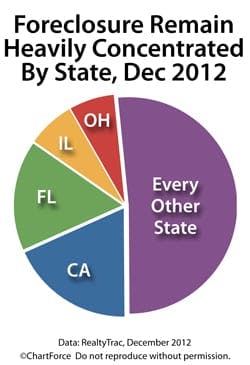
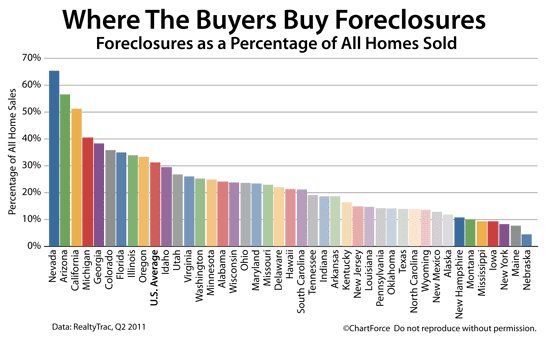
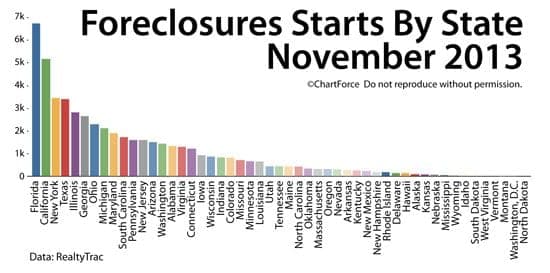
Like all things in real estate, foreclosures are a local phenomenon.  The top 10 foreclosure states accounted for more than 70 percent of all foreclosures nationwide last quarter.

Foreclosures Are Concentrated, But "Spreading Out"

One year ago, this blog took foreclosure data from RealtyTrac and ran Pareto Principle graphs on it. The Pareto Principle is also known as the 80/20 Rule.

It states that 80 percent of the effects come from 20 percent of the causes.

The Pareto Principle held true because, at the time, the national REO system was getting pumped full of new property at a furious pace by the likes of California, Florida and Arizona.

Today, however, the 80/20 Rule no longer holds.

In Q2 2010, the 10 most foreclosure-heavy states now account for just 70 percent of foreclosures.  That's a big drop for a 12-month period and based on RealtyTrac data, foreclosures haven't been this un-concentrated since 2007.

Foreclosure Volume Is Falling -- Especially In Ohio

The "spreading out" of foreclosures nationwide is a signal that REO volume is cresting. The assertion is supported by RealtyTrac's raw numbers, too.  Although foreclosure-related filings topped 300,000 for the 16th straight month, the sum is down 3 percent from May and 7 percent from last June.

Foreclosure filings have remained mostly flat since late last year with some states showing improvement. Ohio is one of them.  Foreclosures in Ohio are down 8% from Q1 2010, and down 2 percent from Q2 2009

Also interesting is the trend among "foreclosure hotspots" toward lesser overall activity.  Quarterly foreclosure rates are down in California, Nevada, Arizona and Florida -- 4 concentrated areas of activity through 2008-2009.

Finding A Foreclosure Deal Online

The National Association of Realtors® says there's a "distressed home discount" of roughly 15 percent.  That can mean excellent savings if you find REO in decent condition. Unfortunately, though, not every REO is in decent condition (and sometimes you find out too late).

Buying foreclosed homes is different from buying a home resale, or new construction.

For one, distressed properties are often sold as-is and may have defects that render them "un-lendable".  Bad roofing or faulty plumbing comes to mind.  In addition, when you're buying a home in foreclosure, there's no such thing as a "quick closing".

Navigating bank REO departments can be a real nightmare for the unexperienced.

When you're buying a home in foreclosure, you should either (1) really know what you're doing, (2) have a terrific real estate agent, or, mo' better, both. You should also know where to find "the deals".

DIY-types may like these 3 sites. Each offers free, 7-day memberships. After 7 days, pay to extend your membership, or you quit and pay nothing.

  1. RealtyTrac offers free access to foreclosure listings
  2. Foreclosure.com offers free access to foreclosure listings
  3. HUDForeclosed.com offers free access to foreclosure listings

7 days should be enough time to get a feel for the REO market in your area.

Get A Bank-Owned REO Pre-Approval Letter

Do your foreclosure research and see what you like. Then, get your bank-owned REO pre-approval letter, call me and I'll take care of it for you.  I'm experienced with short sales and REOs and my bank closes loans quickly.

Plus,I can finance homes for investors with more than 4 mortgages.


Dan Green is an active loan officer. Email or call 513-443-2020. Dan is on Twitter at @mortgagereports.

Tags: Bank-Owned Homes, Foreclosures, Illinois, Ohio, RealtyTrac, REO

MailChimp

Finding Foreclosure Deals : Bank Repossessions Reach An All-Time High

Posted on June 11, 2010
Filed under Foreclosures

Foreclosures Per Household May 2010

It's not your imagination -- there's been a surge in bank-owned homes this year.

According to foreclosure-tracking firm RealtyTrac.com, the number of bank repossessions climbed to a record level for the second straight month in May.  More than 93,000 were repossessed nationwide.

Foreclosures Plunge In Ohio, Illinois

Even as repossessions surge, the total number of foreclosure-related activities -- a sum of REO, default notices, and foreclosure auctions -- appears to be cresting.  After falling for the first time in recorded history in April, activity rose by a meager 1 one percent in May.

The top-side of the Foreclosure Funnel isn't filling so fast these days.

That said, total activity still topped 300,000 for the 15th straight month and distressed homes accounted for 33 percent of April's home resales.

There's other noteworthy statistics in the RealtyTrac report:

  • Ohio foreclosures are down 13% from April 2010, and down 8 percent May 2009
  • Illinois foreclosures are down 20% from April 2010, and up 38% from May 2009
  • Foreclosure rates are down in California, Nevada, Arizona and Florida -- 4 concentrated areas of activity through 2008-2009

In fact, there's even a trend among "foreclosure hotspots" toward lesser overall activity.  Of the Top 10 metropolitan areas for foreclosure-related activity, only one showed an increase last month.

Areas like Las Vegas, Cape Coral-Fort Myers, Phoenix and Reno all posted declines.

Looking For Foreclosure Deals Online

The National Association of Realtors® says the typical "distressed home discount" ranges near 15 percent.  That's excellent value if you can find REO in decent condition.

It's also reason for caution. Buying bank-owned REO in Cincinnati is different from buying a "regular" home.

First, distressed properties tend to be sold as-is and may feature defects that render them "un-lendable".  Things like a bad roof, or faulty plumbing.  Second, when you're buying a home from a bank's REO department, getting a "quick closing" is next-to-impossible.

You have to either (1) know what you're doing, (2) have a terrific real estate agent, or, most likely, both.

Furthermore, you have to know where to find "the deals".

If you're the DIY-type, each of these sites offer free, 7-day memberships to their respective foreclosure databases. After 7 days, you can choose to pay to extend your membership, or you can quit and pay nothing.

  1. RealtyTrac offers free access to foreclosure listings
  2. Foreclosure.com offers free access to foreclosure listings
  3. HUDForeclosed.com offers free access to foreclosure listings

7 days can be more than enough time to find for what you're looking. Then, you can start the negotiation process.

Get A Pre-Approval Letter For A Foreclosure

Do your foreclosure research and see you like. Then, when you need your pre-approval letter, call me and I'll take care of it for you.  I'm experienced with short sales and REOs and my bank can close loans quickly.

Plus, my bank offers financing for investors with more than 4 mortgages.


Dan Green is an active loan officer. Email or call 513-443-2020. Dan is on Twitter at @mortgagereports.

Tags: Bank-Owned Homes, Foreclosures, Illinois, Ohio, RealtyTrac, REO

Comparing The Foreclosure Rate Per Household By State (April 2010)

Posted on May 17, 2010
Filed under Foreclosures

Foreclosures Per Household from RealtyTrac April 2010

The national foreclosure rate is finally falling.

According to foreclosure-tracking firm RealtyTrac.com, the number of foreclosure notices nationwide dropped 2 percent between April 2009 and April 2010.  It's the first time in RealtyTrac's recorded history that the annual foreclosure rate has dropped.

Foreclosures Ease In Ohio, Surge In Illinois

Despite the drop in foreclosure rate, banks are still repossessing homes at an alarming rate -- over 92,000 homes were reclaimed in April.  Home buyers, however, are snatching them up.

According to the National Association of Realtors®, distressed homes accounted for 35 percent of all April home resales with a typical discount ranging near 15 percent.

That's good value if you can find REO that's in decent condition.

There's other noteworthy statistics to mine, too:

  • Nevada's foreclosures rate is twice the national average
  • Ohio's foreclosure rate is below the national average
  • Foreclosure rates dropped in both California and Arizona, 2 foreclosure hot-spots through 2009

The good news for housing doesn't stop there.  9 of the top 10 leading metropolitan areas for foreclosure-related activity showed a drop in annual activity.  Only Reno, Nevada showed an increase.

Finding Foreclosure Deals Online

But with the 15% "foreclosure discount" comes a call for caution. Buying bank-owned REO in Cincinnati is different from buying a "regular" home.

Most notably, distressed properties are often sold as-is and may have defects that render them "un-lendable".  Secondly, getting a "quick closing" is next-to-impossible -- you're at the bank's scheduling mercy.

And, lastly, not all foreclosed homes are searchable online. Working with a real estate agent will usually help you find more stock than searching alone.

If you're the DIY-type, though, you'll want to know about these online tools. Each of these 3 sites offer free, 7-day passes to giant foreclosure databases. After 7 days, you can pay to extend your membership, or quit and pay nothing.

  1. RealtyTrac offers free access to foreclosure listings
  2. Foreclosure.com offers free access to foreclosure listings
  3. HUDForeclosed.com offers free access to foreclosure listings

7 days is usually more than enough time to find for what you're looking.  After that, you can engage a real estate agent to help you find different sets of homes, or to help you negotiate.

Get A Pre-Approval Letter For A Foreclosure

Do your foreclosure research search and see you like. Then, when you need your pre-approval letter, call me and I'll take care of it for you.

I'm experienced with short sales and REOs and my bank can close loans quickly.

Plus, my rates are excellent.


Dan Green is an active loan officer. Email or call 513-443-2020. Dan is on Twitter at @mortgagereports.

Tags: Bank REO, Foreclosure, RealtyTrac, Repossessions

Chart : Foreclosures Per Household By State (March 2010)

Posted on April 19, 2010
Filed under Foreclosures

Foreclosures per household March 2010

There's 11 days left to claim the government's home buyer tax credit and if you're among the thousands of buyers with their sights on foreclosures, the timing may be perfect.

257,000 New Bank REOs Since January

Through the first 3 months of the year, banks have reclaimed more than 257,000 homes -- an all-time quarterly record, according to RealtyTrac. However, your ability to find a foreclosed home in your area depends on where "your area" is.

Foreclosures are disproportionately distributed.

On a per household basis, Nevada leads the nation by far. Its foreclosure concentration is more than 4 times the national average and two times as high as the next two states on the list -- California and Arizona. Florida is only a hair behind.

Clearly, buying REO in these states will give you more product from which to choose, but there's ample supply in Ohio and Illinois, too.  Both are pacing just short of the 1-per-352 households national average.

Buying REO Ain't All Sunshine And Flowers

Regardless of where you’re buying, foreclosures and REO are making a profound impact on pricing and product. There’s excellent value if you know where to look, but you also need to know how to look.

A few pointers on foreclosures:

  1. Buying bank-owned homes can take 120 days to close or more. This could preclude your ability to claim the tax credit.
  2. Foreclosures aren’t always listed for sale publicly. Some inventory is privately-held and requires "knowing a guy".
  3. Bank-owned homes are often sold "as is". There may be defects that render the homes mortgage-ineligible.

The REO market is slightly different from the “existing home” resale market. If you have an interest in buying REO, I recommend working with an experienced real estate agent when you're ready to make your bid.

Finding REO Without A Real Estate Agent

Maybe you want to search for foreclosures without the help of a real estate agent.  If you do, my clients have told me that there 3 websites, in particular, that are helpful. Each site offers a free, 7-day pass -- usually enough to help you scout the market.

  1. RealtyTrac offers free access to foreclosure listings
  2. Foreclosure.com offers free access to foreclosure listings
  3. HUDForeclosed.com offers free access to foreclosure listings

And, when you see something you like, then you can talk to your real estate agent about it. Negotiating for a bank-owned home is different from negotiating for a "regular" home.  You're going to want somebody experienced on your side.

Get A Pre-Approval Letter For A Foreclosure

High numbers of REO have created terrific opportunities for buyers. Do your own research search and see you like. Then, when you're in need of a pre-approval letter, call me and I'll take care of you.  I'm experienced with short sales and REOs and would be happy arrange for your mortgage.

My rates are very good and my bank can close loans quickly.


Dan Green is an active loan officer. Email or call 513-443-2020. Dan is on Twitter at @mortgagereports.

Tags: Foreclosures, RealtyTrac, REO, Short Sales

February 2010 : 4 States Account For More Than 50% Of Foreclosure Activity

Posted on March 15, 2010
Filed under Foreclosures

Foreclosure concentration across the United States February 2010Foreclosure-related filings topped 300,000 last month, according to foreclosure-tracking firm RealtyTrac.

Nationwide, 1 in every 418 households was served some form of foreclosure notice but -- as always -- foreclosures are more common in some areas than others.

Many Foreclosures, Few States

In February 2010, 4 states accounted for more than half of the country's foreclosure-related activity:

  • California : 22.2 percent
  • Florida : 17.5 percent
  • Michigan : 6.5 percent
  • Illinois : 5.6 percent

Combined, these four states represent 56% of foreclosures but just 25% of the population. Clearly, foreclosures are a local phenomenon.

They're also the spring season's biggest story.

Foreclosures Are A Growing Percentage Of Total Sales

Because foreclosures and other "distressed" homes tend to sell at a discount, they now account for 38 of all home resales.  This is up from 33 percent in the month prior.

For first-time homebuyers, move-up homebuyers, and even for investors with more than 4 properties, buying foreclosures in Cincinnati and Chicago has never been easier.

Foreclosures are big business and new listings are available 24/7.

Where To Find Foreclosures Online For Free

My clients have told me that there 3 websites, in particular, are a good place to start for foreclosures, if that's what interests you. Each site offers a free, 7-day pass and that's usually enough to help you scout the market for something worth buying.

  1. RealtyTrac offers free access to foreclosure listings
  2. Foreclosure.com offers free access to foreclosure listings
  3. HUDForeclosed.com offers free access to foreclosure listings

Then, when you see something you like, talk to your real estate agent about it, or to a skilled foreclosure-specializing agent. Negotiating for a bank-owned home is different from negotiating for a "regular" home.

You're going to want somebody experienced on your side.

How To Get Pre-Approved For A Foreclosure

High foreclosure levels have led to interesting buying opportunities. Do your search and see what comes up for you locally. Then, when you're ready for your pre-approval letter, call me and I'll take care of you.  I'm experienced with short sales and REOs and would be happy arrange for your mortgage.

My rates are very good and my bank can close loans quickly.


Dan Green is an active loan officer. Email or call 513-443-2020. Dan is on Twitter at @mortgagereports.

Tags: 5-10 Properties, Foreclosures, RealtyTrac, REO, Short Sales

Buying REO? Keep An Eye On Foreclosures Per Capita.

Posted on February 12, 2010
Filed under Foreclosures

Foreclosures Per Capita January 2010

Foreclosure-related filings topped 300,000 last month, bringing the 12-month total to somewhere near 1.4 million nationwide.  Some states, of course, are more foreclosure-heavy than others.

According to RealtyTrac, the state of Nevada keeps its title as Foreclosure Central with a foreclosure rate 4 times the national average.  Arizona, California and Florida aren't far behind.

In fact, the country's foreclosure activity is so heavily concentrated that a full 40 states fall below the national foreclosure average.  That's a fascinating statistic and puts some perspective on the "foreclosure crisis" we keep hearing about. Clearly, foreclosures are a local phenomenon.

Oh, and they're selling like hotcakes, too. Distressed homes now account for 1/3 of all home resales.

The good news is that buying a foreclosure in Cincinnati, Chicago, or anywhere else has never been simpler.  Because foreclosures are big business now, a cottage industry has spawned and reliable foreclosure data is available 24/7.

These 3 websites are a good place to start.  Each offers a free, 7-day pass and that's usually enough to help you scout the market.

  1. RealtyTrac offers free access to foreclosure listings
  2. Foreclosure.com offers free access to foreclosure listings
  3. HUDForeclosed.com offers free access to foreclosure listings

Then, when you see something you like, talk to your real estate agent about it. Negotiating for a bank-owned home is different from negotiating for a "regular" home. You're going to want somebody experienced on your side.

High foreclosure levels have led to interesting buying opportunities. Do your search and see what comes up for you locally. Then, when you're ready for your pre-approval letter, call or .

I'm experienced with short sales and REOs and will arrange for your mortgage.

My rates are very good and my bank can close loans quickly.


Dan Green is an active loan officer. Email or call 513-443-2020. Dan is on Twitter at @mortgagereports.

Tags: Foreclosures, RealtyTrac

Foreclosure Distribution In The United States (2005-2009)

Posted on January 19, 2010
Filed under Foreclosures

Foreclosure distribution in the United States 2005-2009

At the risk of appearing obsessed with foreclosure data, I want to run another chart of the country's Top 10 Foreclosure States.  Thank you to my friends at RealtyTrac for running this report special for me.

Foreclosures have always been an issue for banks, but since 2005, the percentage of foreclosure filings coming from the top 10 foreclosure-filing states has moved markedly higher.

  • Q1 2005 : 64.3 percent
  • Q4 2009 : 72.4 percent

The U.S. foreclosure problem is concentrating by geography.

And meanwhile, the 10 states included in the list -- California, Florida, Illinois, Arizona, Michigan, Texas, Georgia, Nevada, Ohio and Nevada -- account for just 45% of the nation's population.

Distilled, 45 percent of states represent 72 percent of foreclosure filings.

Clearly, some states are more foreclosure-heavy than others. We must use cautioun when interpreting national housing statistics. A few states can distort the bigger picture.

For example, when RealtyTrac says annual foreclosures reached 2.8 million last year and that foreclosures are up by one-fifth, that's a national story.  On a local level, however, the story's much different.

10 states showed year-over-year improvement in 2009 -- including Ohio and Indiana. Both states had been hard-hit by losses in manufacturing.

And even when we examine states like Florida and Arizona -- two of the most foreclosure-heavy states in the nation -- we can find areas in which foreclosure filings are down and the housing market is thriving.

Miami is a terrific example of this.

All real estate is local.  Period.  We can't compare states any more than we can compare Dayton to Cincinnati.  Heck, we can't even put Montgomery and Blue Ash in the same conversation. Even though both towns feed into Sycamore schools, each has unique characteristics that drive its home values.

Big picture data is important, but it's what happens on the streets that matters, pardon the pun.

Buying foreclosures is big business so if you're searching foreclosed homes in Cincinnati, start with this link to RealtyTrac.  There's a 7-day free pass to the database and that should be enough time to help you gauge the market and identify some homes. The local market won't be as big as the national news stories would have you believe, but it's still there.

Then, when you've found a home and need a prequalification letter to accompany your offer, and I'll get you handled.

Working with foreclosures -- especially jumbo ones -- is among my strong suits.


Dan Green is an active loan officer. Email or call 513-443-2020. Dan is on Twitter at @mortgagereports.

Tags: Foreclosures, Jumbo Mortgages, RealtyTrac

Foreclosure Activity Increased Across Most States In 2009. Ohio Wasn’t One Of Them.

Posted on January 15, 2010
Filed under Foreclosures

Foreclosure deltas for the ten most foreclosure-heavy states of 2009

Let's hear it for Ohio.

As reported by RealtyTrac.com, the Buckeye State is the only state among the Top 10 in 2009 Foreclosure Activity to post fewer filings versus 2008.

It's a nice boost for a state that's been beaten down by high unemployment and the New York Jets. Foreclosures are slowing statewide, helping both home values and homeowner morale. The market is turning.

The RealtyTrac 2009 Foreclosure Report included some other noteworthy nuggets, too.

  1. 46 states account for just 49% of 2009's foreclosures. California, Florida, Arizona and Illinois account for the rest.
  2. The nation averaged 1 foreclosure filing per 46 households. 80% of states fell below the national average.
  3. The pace of foreclosure filings fell in 10 states (including Ohio).

For as thorough as the RealtyTrac report is, though, it's easily skewed by factors from the outside, the biggest of which is political. Many states have enacted some form of foreclosure prevention law that slows, delays, or halts the foreclosure process. Another factor is a lender's ability to process large numbers of foreclosures at one time.

There could be many more in-trouble homeowners than the data has us believe.

It's not stopping foreclosures from being big business, however. Distressed homes account for one-third of home resale activity, according to the National Association of REALTORS™. The key to getting a "deal" is to find the cheap home before the next guy.

The good news is that you don't need a real estate agent to get started on your search.  A host of websites aggregate and collate foreclosure information, presenting it like a listing sheet.  You can search for homes using an innumerable number of traits.

3 sites that provide great information include:

  1. RealtyTrac (free 7-day access)
  2. Foreclosure.com (free 7-day access)
  3. HUDForeclosed.com (free 7-day access)

If you're considering foreclosed homes as a first-time or move-up, or even as an experienced investor, register with all 3 sites -- each pulls from a slightly different data set so you'll see different homes from one site to the next.  You'll be able to quickly narrow your search to the viable homes and get on with the business of buying.

Even in Ohio, foreclosure opportunities are still out there. Search online and see what you find. Then, when you're ready for your pre-approval letter, call or . I'm experienced with foreclosures for first-time buyers and can also do mortgages for people that own more than 4 properties.

Oh, and my rates are really good.


Dan Green is an active loan officer. Email or call 513-443-2020. Dan is on Twitter at @mortgagereports.

Tags: 5-10 Properties Program, Foreclosures, Ohio, RealtyTrac

Finding Foreclosures To Buy : Do Your Own Homework Before Calling Your Real Estate Agent

Posted on December 11, 2009
Filed under Foreclosures

Foreclosure Change By State November 2009

Foreclosure activity in most the nation's largest states dropped last month, buoying the national average lower despite 30 states faring worse than the national average.  Total foreclosure activity nationwide slipped for the 4th straight month.

Versus October, activity is down 8 percent.

A reduction in foreclosure activity is big news for housing, but the big-ger news is buried in the stats.

  1. Defaults in Nevada -- the foreclosure front-line leader -- are down 33% from 2008
  2. Foreclosures Per Capita are lower for the majority of states
  3. Job-ravaged Ohio's foreclosures are down 9 percent from last November

Overall, November's foreclosure report is another positive signal for the housing market.  Recovery is underway.

But for homebuyers searching foreclosed properties, the window for "a deal" may be closing.  The supply of distressed property is dropping and multiple-offer situations are increasingly common.  The key, therefore, is to find a property before the next buyer and, let's face it, your real estate agent has other clients besides you.

Some homework you're better off doing yourself.  The good news is that you don't have to go far to do it.

Since foreclosures, short sales and REO have become Big Business, tens of tech firms have tried to capitalize on the need for a better system of distressed-home aggregation. So far, 3 companies have emerged as winners, each offering 24/7 access to foreclosed homes in every zip code in America with tons of searchable traits.

  1. RealtyTrac (free 7-day access)
  2. Foreclosure.com (free 7-day access)
  3. HUDForeclosed.com (free 7-day access)

If you're considering foreclosed homes as a first-time buyer, a move-up, or even as an experienced investor, consider registering with all 3 -- each pull from a slightly different database so you may see different homes from one site to the next. It should give you a good list of homes to starting seeing with your agent when you're ready.

Foreclosures activity is slowing, but -- for now, at least -- buying opportunities are still out there. Search online and see what you find. Then, when you're ready for your pre-approval letter, call or . I'm experienced with bank-owned homes and am as comfortable with first-time buyers as with investors owning more than 4 properties.

Plus, my rates are really good.


Dan Green is an active loan officer. Email or call 513-443-2020. Dan is on Twitter at @mortgagereports.

Tags: Foreclosures, RealtyTrac

Of The Top 10 Foreclosure Markets Nationwide, Only 1 Is Getting Worse

Posted on November 13, 2009
Filed under Foreclosures

Percent change in foreclosure activity in the 10 most foreclosure-heavy states October 2009

The pace of foreclosure activity slowed for the third straight month last month.  According to RealtyTrac.com, foreclosures are down 3 percent from September.

Slowing foreclosure activity is big news for the housing market, but the big-ger news is buried in the stats.

  1. Foreclosure activity fell in 9 of the top 10 foreclosure states nationwide
  2. Defaults in Nevada -- long the Foreclosure Capital of the County -- plunged 10% from last October
  3. Job-ravaged Ohio's foreclosures are down 4 percent from last October

Overall, this month's foreclosure report is another positive signal in the housing market.  Recovery is underway.

For homebuyers looking at foreclosed homes, though, the window for "a deal" may be closing.  Since foreclosures became "big business" toward the end of 2008, real estate firms found ways to make buying a foreclosed home faster and cheaper.

It's no surprise that distressed properties now account for nearly 1/3 of home resales.

Especially because foreclosure data is now free 24/7.

If you're considering a foreclosed home, check out these 3 websites.  They're among the biggest of the foreclosure-tracking companies and each offers a free, 7-day pass.  That's usually enough to get you on the right path so you know what to tell your real estate agent.

  1. RealtyTrac (free 7-day access)
  2. Foreclosure.com (free 7-day access)
  3. HUDForeclosed.com (free 7-day access)

You may want to register with all 3 because each site uses slightly different foreclosure sources.

The number of foreclosures are slowing, but, for now, the buying opportunities are still out there. Search online and see what you find. Then, when you're ready for your pre-approval letter, call or . I'm experienced with bank-owned homes and I'm as comfortable with first-time buyers as I am with investors owning more than 4 properties.

Plus, my rates are really good.


Dan Green is an active loan officer. Email or call 513-443-2020. Dan is on Twitter at @mortgagereports.

Tags: Foreclosures, RealtyTrac

Foreclosures Per Household Data Shows The Way To The Homebuying Bargains

Posted on October 16, 2009
Filed under Foreclosures

Foreclosures Per Household By State September 2009

The severity of the "Foreclosure Crisis" depends on where you live, it seems. According to the RealtyTrac.com Q3 foreclosure report, Foreclosures Per Household skews heavy towards just a few states.

Nevada leads the nation with 1 foreclosure per 23 households. Its rate is six times the national average of 1 foreclosure per 136 households.

Arizona, California, and Florida are a distant 2, 3 and 4, respectively.

Foreclosures can be difficult for families that lose their homes, but for real estate investors and other homebuyers, distressed properties can represent a tremendous homebuying opportunity.

Especially now that "buying foreclosures" is big business.

Since 2006, as the number of foreclosures have risen, so have the number of companies offering access to national foreclosure databases.  And all of them provide unlimited, free access to their foreclosures listings for 7 days.

3 of the most popular foreclosure-listing companies include:

  1. RealtyTrac (free 7-day access)
  2. Foreclosure.com (free 7-day access)
  3. HUDForeclosed.com (free 7-day access)

Each foreclosure database is unique so it may not be a bad idea to register with all 3.

Foreclosures are creating buying opportunities. Search online and see what comes up. Then, when you're ready for your pre-approval letter, call or . I'm experienced with bank-owned homes and I'm as comfortable with first-time buyers as with investors owning more than 4 properties.

Plus, my rates are really good.


Dan Green is an active loan officer. Email or call 513-443-2020. Dan is on Twitter at @mortgagereports.

Tags: Foreclosures, RealtyTrac

How To Find Distressed Properties Using Foreclosures-Per-Capita Statistics

Posted on September 11, 2009
Filed under Foreclosures

Foreclosures Per Capita By State August 2009

According to the August RealtyTrac.com foreclosure report, the severity of the "Foreclosure Crisis" depends on where you live.  Foreclosures Per Household are highly skewed towards just a few states.  The data is so lop-sided, in fact, that 41 states fall below the national average.

For shoppers of foreclosed homes, the RealtyTrac data is a true buyer's guide to Where To Find Distressed Homes.

With 1 foreclosure for every 62 households, Nevada is Foreclosure Central. Its default rate is six times the national average of 1 foreclosure per 357 households. Florida, California and Arizona are a distant 2, 3 and 4.

The phrase "Foreclosed homes" used to be a scary one. Agents were unfamiliar with distressed homes and banks weren't skilled in selling them.

Since 2007, though, gradually, both sides have grown more comfortable with foreclosures and it's now at the point where buying a distressed property is cheaper, faster, and easier than ever before.

The auction block is no longer reserved for experienced real estate investors. Today, anyone can buy a foreclosed home -- and does.  Especially first-time home buyers out looking for a bargain.

Home buyers and other "casual lookers" can use RealtyTrac's completely free 7-day trial to see foreclosed homes for sale in every zip code countrywide.  All you give is an email address and, in exchange, you get access to the full-featured search engine.  After 7 days, you can decide whether the full membership is worth paying for.

Foreclosure.com has an excellent site, too -- also with a 7-Day free trial.  It draws from a different database so signing up with both companies isn't such a bad idea, either.

Large numbers of foreclosures have created interesting buying opportunities nationwide. do your search and see what comes up.  Then, when you're ready for your pre-approval letter, call or . I'm experienced with short sales and REOs and can arrange your financing for you.


Dan Green is an active loan officer. Email or call 513-443-2020. Dan is on Twitter at @mortgagereports.

Tags: Foreclosures, RealtyTrac, Scary Movie

Foreclosures Per Household Statistics Show Where Defaults Are Concentrating

Posted on August 14, 2009
Filed under Foreclosures

Foreclosures Per Household By State July 2009

According to RealtyTrac, for the manyth consecutive month, foreclosures are concentrating across just a few states.  The data is skewed so badly that 44 states fall below the national average.  That's saying something.

With 1 foreclosure for every 56 households, Nevada by far leads the country.  It's default rate is six times the national average of 1 foreclosure per 355 households.  California, Arizona and Florida are a distant 2, 3 and 4.

The number of foreclosures are up 7 percent nationally.

For real estate investors and other home buyers, RealtyTrac's data can be a roadmap of sorts to finding "good deals".  Not every foreclosed home will be a gem, but there are plenty of low-priced properties just begging for a qualified buyer.

RealtyTrac lists them by ZIP code.

"Foreclosed homes" used to be a frightening phrase in real estate.  Agents were unfamiliar with them and banks didn't always know how to dispose of them.  Over the past 18 months, however, as both sides have grown more comfortable with foreclosures, the process of buying home in default has become both simpler and quicker.

This is no more apparent than in the number of first-time home buyers looking at foreclosed properties.  In the past, buying a home at auction or from a bank was the realm of the experienced real estate investor. Today, a real estate investor bidding on foreclosure may find himself competing with a first-timer, a family looking for vacation property, and households getting ready for retirement.

Buying a home in foreclosure is (almost) a non-event.

Several companies aggregate foreclosure listing including the aforementioned RealtyTrac.  It offers a completely free 7-day trial.  So does RealtyTrac competitor Foreclosure.com. Presumably, both draw from slightly different databases to register at both may make sense -- it's free for 7 days, after all.  After 7 days of free access, you should know whether a paid membership is ultimately worth it.

Foreclosures can be terrible for impacted households but to the tuned-in buyer, they can represent opportunity.


Dan Green is an active loan officer. Email or call 513-443-2020. Dan is on Twitter at @mortgagereports.

Tags: Foreclosures, Made-Up Numbers, RealtyTrac

Want To Buy A Foreclosed Home? Here’s The Chart For Where To Look.

Posted on July 17, 2009
Filed under Foreclosures

Foreclosures by state in a bar graph, June 2009

It's transcended trending -- it's now a given.  Foreclosures regionalize.

In June, for the brazillionth time in as many months, just 3 states accounted for half of the country's foreclosure-related activity.  The top 10 states accounted for 75%.

Clearly, the foreclosures crisis doesn't impact every state in the same way.

Setting aside the personal pain foreclosures can cause, the massive mortgage default numbers have a silver lining.  Both first-time home buyers and opportunistic real estate investors can now buy foreclosed homes at relatively low prices and finance them at attractive mortgage rates.

Not every foreclosure is going to a "diamond in the rough" but there are some great deals to be had out there.  It may help explain why distressed properties accounted for nearly half of all home resales in April and for one-third of May's.

Meanwhile, to meet the burgeoning demand for foreclosed homes, several real estate companies built high-powered Foreclosure Search Engines geared at general home-buying public.  Whether you're a home buyer, real estate investor, or just curious about your neighborhood, there's lot of ways to find a foreclosed home.

Foreclosure search engines are rarely free but often come with "trial periods".  Trial memberships are usually full-featured and you can use your 7 free days to make an unlimited number of queries to help ascertain whether or not the foreclosure market is a good fit for your personal real estate goals.

For example, if you're looking for foreclosed homes to convert into turn-key rental properties or a vacation home, you may want to use a trial membership to search the 3 states in which foreclosures are most prevalent.

Or, just search for foreclosures in general. This form, in particular, lets you search for foreclosures by ZIP code.

According to RealtyTrac, the number of Q2 foreclosures was the second highest on record so there's deals to be had if you know where to look.  And when you find that deal and want to finance it, be sure to reach out to me directly by phone or email.

I'd be happy to work with you.


Dan Green is an active loan officer. Email or call 513-443-2020. Dan is on Twitter at @mortgagereports.

Tags: Fictional Numbers, Foreclosures, RealtyTrac

The 3 States That Accounted For More Than Half Of The Nation’s Foreclosure Activity in May 2009

Posted on June 12, 2009
Filed under Foreclosures

Foreclosures by state, May 2009If real estate is local, foreclosures must be, too.

According it May 2009 foreclosure trends report, foreclosure-tracker RealtyTrac showed that more than half of the country's foreclosure last month were concentrated across just 3 states:

  1. California
  2. Florida
  3. Nevada

On a population basis, these 3 states represent 19 percent of the U.S. population.

The statistic can be startling, but no matter in which state you live, it's important to understanfd that foreclosures "somewhere else" have far-reaching influence.  This is because -- unlike you and I both -- a mortgage lender's personal geography isn't limited to just one city or one state.

In contrast, lenders "live" everywhere. 

As foreclosures degrade lender loan portfolios, consumers have to deal with things like higher downpayment requirements, tougher underwriting hurdles, and larger fee sets. 

Furthermore, similar to the fate of homeowners insurance rates after a hurricane, borrowers with less than 20 percent equity find that the cost of their private mortgage insurance increases dramatically, or becomes generally unavailable.

These changes impact to homeowners in all states -- not just the 3 named above.  And in some cases, they mean the difference between a home loan approval and an underwriting turndown.

That said, foreclosure-seekers are finding excellent affordability in real estate right now -- especially Snowbirds in search of warmer-climate homes for vacation or retirement.  It's one reason why May's Existing Home Sales report showed West Region sales up by nearly 20 percent -- there's plenty of good value there. 

Additionally, first-time home buyers in all markets are finding foreclosed-home price points to be sometimes irresistable.

If you're interesting in buying foreclosures -- either for personal or investment use -- the good news is that foreclosure-related information is generally available to the public.  Your real estate agent, for example, should be able to produce a complete list of available foreclosed home for you in whatever your target market is without much effort.

Or, if you're just kicking the proverbial foreclosure tires, consider using a free, online tool like RealtyTrac's "homes for half price" database.  It's a comprehensive, state-by-state listing of foreclosures with a 7-Day free trial attached to it.


Dan Green is an active loan officer. Email or call 513-443-2020. Dan is on Twitter at @mortgagereports.

Tags: Foreclosures, Jason Mraz, RealtyTrac

3 States Account For Half Of The Country’s Foreclosures And They’re Not Named “Illinois” Or “Ohio”

Posted on April 20, 2009
Filed under Foreclosures

March 2009 foreclosures by stateSince 2007, foreclosures have dominated national real estate news.  You can't turn on the news or open a paper without seeing at least one foreclosure-related story.

But for all of the discussion, even two-and-a-half years after the peak of the housing market, home foreclosures continue to be geographically concentrated.

In looking at the latest stats from foreclosure marketplace RealtyTrac, more than half of the country's foreclosure actions from March 2009 occurred in just 3 states -- California, Florida and Nevada.

Those 3 states represent just 19 percent of the nation's population.

We can speculate about why these three states, in particular, dominate the foreclosure market.  Relative to other states, California, Florida and Nevada attracted an abnormal amount of real estate speculation and those homes were financed at a time when lender guidelines were at their loosest.

Values have since fallen and mortgage guidelines are more restrictive.  Homeowners, unable to sell or refinance, become more prone to default.  The same can be said for Arizona's numbers which, like the 3 states above, are disproportionately large.

The theory gains credence in looking at foreclosed homes in Illinois or Ohio. Both states have high numbers of foreclosures, but those foreclosures track more closely to the states' relative populations.  Likely, this is because neither state is considered a hotbed for real estate speculation.

Despite the country's somewhat local foreclosure distribution, foreclosure are a national issue.  This is because the banks that lend on homes lend in all 50 states -- not just 3 of them.  The impact of mortgage defaults in one region can quickly spread to others.

In part because of rising foreclosures nationwide, the following has happened:

  • Mortgage guidelines have tightened for mortgage applicants
  • Downpayment requirements have increased for home buyers
  • Private mortgage insurance has become more expensive for everyone

This is an important set of changes for a would-be borrower or existing homeowner.  In some cases, the changes keep a person from qualifying for a home puchase or a refinance. Ironically, this can lead to more defaults which leads to tighter guidelines, and so on and so on.

You can search the March 2009 foreclosure report and foreclosure listings around the country on RealtyTrac's website.

(Post adapted with permission from Bring the Blog)


Dan Green is an active loan officer. Email or call 513-443-2020. Dan is on Twitter at @mortgagereports.

Tags: Foreclosures, RealtyTrac

The 3 States That Account For 50% Of The Nation’s Foreclosure Actions

Posted on March 13, 2009
Filed under Foreclosures

Relative foreclosure rates by stateI like graphics. Graphics tell stories. Especially graphics like this one. 

According to RealtyTrac.com, California, Florida and Arizona -- home to just 19.99 percent of the country's populace -- accounted for half of the nation's foreclosure actions in February 2009.

This is especially interesting in the context of a USA Today graphic that gets granular on foreclosure down to the county level.  Turns out that when 2008 ended, 35 of the country's 3,232 counties were responsible for 50 percent of the year's foreclosure-related problems.

Foreclosure is a national issue, it's just not the kind of national issue that the press makes out to be. 

Sure, foreclosures exist and defaults do happen.  They're a more frequent occurrence than ever before.  But if you're living in Blue Ash, Ohio or La Grange, Illinois, you're not waking up to a street full of auction signs like some other folks.

But distance from the problem doesn't mean you're home free.  As loans go bad, mortgage lenders respond by tightening their guidelines; restricting what they'll lend and to whom.  It's one reason why downpayment requirements are higher and why loan-level pricing adjustments exist.

In this way, a local issue like mortgage default can be a problem to the nation as a whole.


Dan Green is an active loan officer. Email or call 513-443-2020. Dan is on Twitter at @mortgagereports.

Tags: LLPA, puns, RealtyTrac

Live Rate Quotes

Required fields are marked with*