The 80/20 Rule No Longer Applies To REO and Foreclosures
Posted on July 16, 2010
Filed under Foreclosures
Tweet
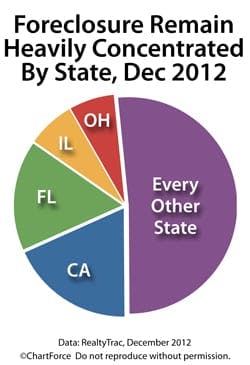
Like all things in real estate, foreclosures are a local phenomenon. The top 10 foreclosure states accounted for more than 70 percent of all foreclosures nationwide last quarter.
Foreclosures Are Concentrated, But "Spreading Out"
One year ago, this blog took foreclosure data from RealtyTrac and ran Pareto Principle graphs on it. The Pareto Principle is also known as the 80/20 Rule.
It states that 80 percent of the effects come from 20 percent of the causes.
The Pareto Principle held true because, at the time, the national REO system was getting pumped full of new property at a furious pace by the likes of California, Florida and Arizona.
Today, however, the 80/20 Rule no longer holds.
In Q2 2010, the 10 most foreclosure-heavy states now account for just 70 percent of foreclosures. That's a big drop for a 12-month period and based on RealtyTrac data, foreclosures haven't been this un-concentrated since 2007.
Foreclosure Volume Is Falling -- Especially In Ohio
The "spreading out" of foreclosures nationwide is a signal that REO volume is cresting. The assertion is supported by RealtyTrac's raw numbers, too. Although foreclosure-related filings topped 300,000 for the 16th straight month, the sum is down 3 percent from May and 7 percent from last June.
Foreclosure filings have remained mostly flat since late last year with some states showing improvement. Ohio is one of them. Foreclosures in Ohio are down 8% from Q1 2010, and down 2 percent from Q2 2009
Also interesting is the trend among "foreclosure hotspots" toward lesser overall activity. Quarterly foreclosure rates are down in California, Nevada, Arizona and Florida -- 4 concentrated areas of activity through 2008-2009.
Finding A Foreclosure Deal Online
The National Association of Realtors® says there's a "distressed home discount" of roughly 15 percent. That can mean excellent savings if you find REO in decent condition. Unfortunately, though, not every REO is in decent condition (and sometimes you find out too late).
Buying foreclosed homes is different from buying a home resale, or new construction.
For one, distressed properties are often sold as-is and may have defects that render them "un-lendable". Bad roofing or faulty plumbing comes to mind. In addition, when you're buying a home in foreclosure, there's no such thing as a "quick closing".
Navigating bank REO departments can be a real nightmare for the unexperienced.
When you're buying a home in foreclosure, you should either (1) really know what you're doing, (2) have a terrific real estate agent, or, mo' better, both. You should also know where to find "the deals".
DIY-types may like these 3 sites. Each offers free, 7-day memberships. After 7 days, pay to extend your membership, or you quit and pay nothing.
- RealtyTrac offers free access to foreclosure listings
- Foreclosure.com offers free access to foreclosure listings
- HUDForeclosed.com offers free access to foreclosure listings
7 days should be enough time to get a feel for the REO market in your area.
Get A Bank-Owned REO Pre-Approval Letter
Do your foreclosure research and see what you like. Then, get your bank-owned REO pre-approval letter, call me and I'll take care of it for you. I'm experienced with short sales and REOs and my bank closes loans quickly.
Plus,I can finance homes for investors with more than 4 mortgages.
Dan Green is an active loan officer. Email or call 513-443-2020. Dan is on Twitter at @mortgagereports.